

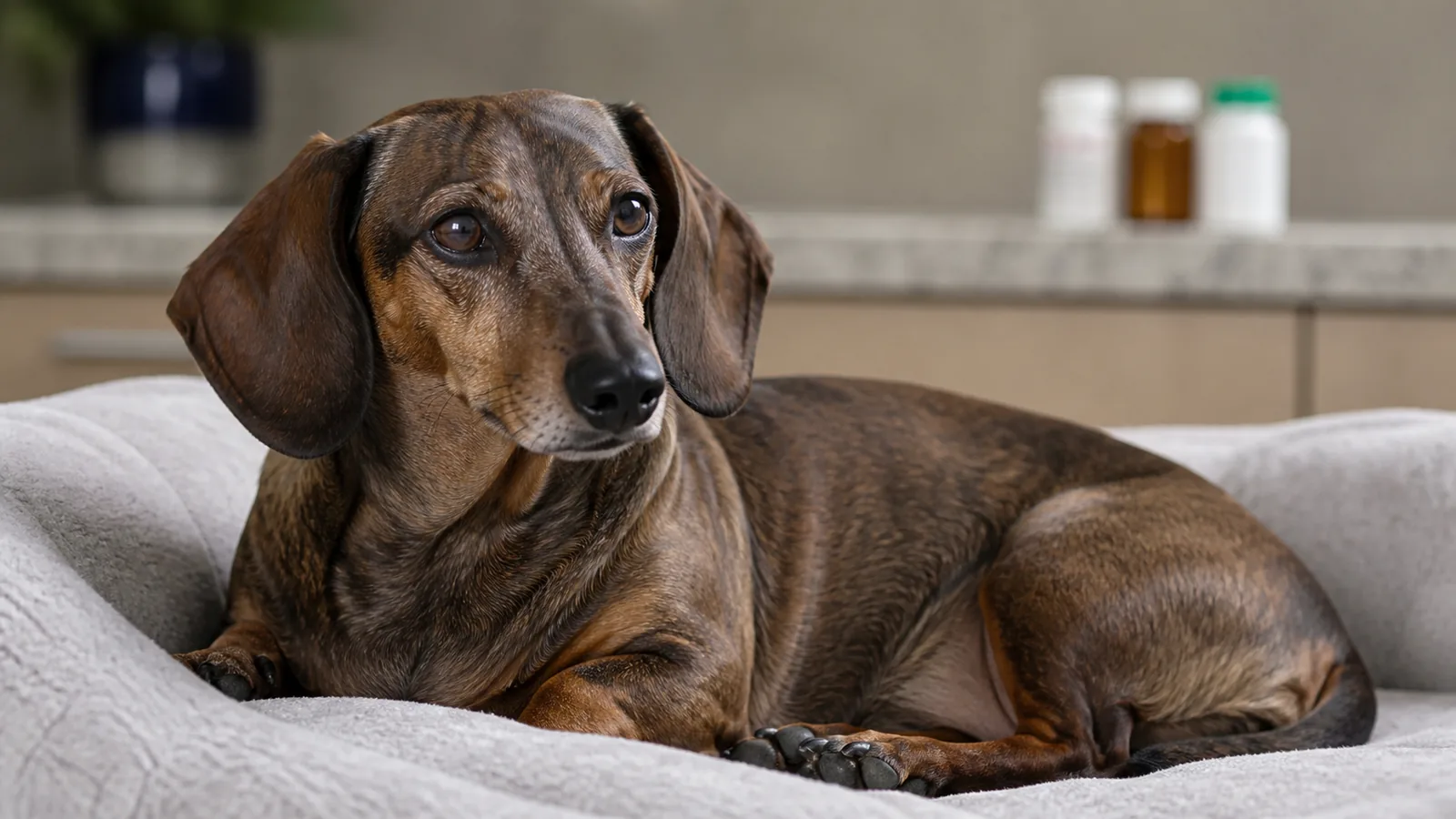
The yearly checkup is where most heart disease in dogs and cats is first discovered, usually when the stethoscope picks up a murmur or an irregular rhythm. That finding is what sets a heart medication plan in motion, with blood pressure readings, senior bloodwork, and imaging filling in the rest of the cardiac picture. From there, drugs like pimobendan, diuretics, and ACE inhibitors each take on a specific job: strengthening the pumping muscle, clearing fluid from the lungs, or easing the pressure the heart works against. A new cardiac diagnosis and a handful of unfamiliar prescriptions can feel like a lot, but most pets respond well to treatment, and a problem found at a checkup gets managed from the stage where these drugs do the most good.
Tidmore Veterinary Hospital, an AAHA-accredited practice in Northport, builds this kind of heart check into every wellness visit for dogs and cats. If we hear something that deserves a closer look, our on-site ECG, digital X-rays, and in-house laboratory let us start the cardiac workup here, and we consult with cardiology specialists when a case calls for deeper expertise. When your dog or cat is due for an exam, or you have questions about heart medications already prescribed, request an appointment and we will begin with a careful listen.
Heart Medications in Plain English
- A murmur on its own doesn't tell us which medication your pet needs; imaging, rhythm tracings, and bloodwork shape the prescription.
- Pimobendan, diuretics, ACE inhibitors, and beta-blockers each solve a different piece of the problem, which is why heart patients usually take a combination rather than one pill.
- The breathing count you take while your pet sleeps is the most useful number you can track at home, and it often flags trouble days before anything looks wrong.
- Most dogs and cats feel better within days of starting treatment, and many live comfortably for months to years with regular rechecks and small dose adjustments.
Why Does Catching Heart Disease Early Change the Plan?
Heart disease found before symptoms start gets treated at the stage where medication does the most good, often adding months or even years of comfortable life. A good share of it is caught by accident, when a heart murmur turns up during a routine exam in a pet who seems perfectly fine at home.
That's the argument for senior wellness exams and screening bloodwork once a dog or cat reaches the back half of their life. Lab work adds context an exam can't: kidney values that will matter the day diuretics start, a thyroid level that explains a racing rate in an older cat. NT-proBNP, a blood marker that climbs when heart muscle is stretched, helps sort a cardiac cough from an airway one, and it's especially useful in cats, who often have real disease without an obvious murmur.
Waiting for symptoms means starting with less room to work. The dog who arrives coughing at midnight gets the same drugs as the dog diagnosed a year earlier. The earlier dog just got a year of a stronger, less-stressed heart first.
What Happens After We Hear a Murmur at Your Pet's Exam?
Hearing a murmur starts the workup rather than finishing it. A murmur tells us something is off, but the next tests tell us how serious it is.
During the exam: careful listening with a stethoscope tells us where the sound is loudest, how strong it is, and whether the lungs sound harsh.
Chest radiographs: tell us how big the heart looks and whether fluid has begun gathering in the lungs.
Blood pressure: high blood pressure forces the heart to push against extra resistance with every beat, can create or worsen a murmur, and often travels with kidney and thyroid disease in older pets, so the number shapes the treatment plan as much as the murmur itself.
Echocardiogram: ultrasound shows which chamber is affected, how well the muscle is contracting, and whether the heart has already enlarged.
Electrocardiogram: traces the electrical signal beat by beat, which is how an irregular rhythm gets named instead of just noticed, and we run that tracing here.
Not every pet needs every test, and we'll explain our reasoning with every step. If an echocardiogram is needed, we'll coordinate with a veterinary cardiologist we trust.
Which Heart Conditions Turn Up in Dogs and Cats?
The diagnosis behind the murmur sets the course, since a leaky valve, thickened muscle, and a rhythm disturbance each need different drugs. Small dogs most often have valve disease, large dogs develop an enlarged, weakened heart, and cats most often have thickened heart muscle. Heartworm disease belongs on the Alabama list too, since adult worms living in the pulmonary arteries strain the right side of the heart, and year-round prevention is the simplest cardiac protection you can give a dog or cat here.
The Heart Conditions Dogs Get Most Often
- Valve disease: Mitral valve disease is behind the majority of canine heart disease, concentrated in small breeds like Cavaliers, Dachshunds, and Toy Poodles, where a thickened valve lets a jet of blood slip backward on each beat.
- Muscle disease: Dilated cardiomyopathy stretches and weakens the heart muscle until the chambers can no longer squeeze effectively, and Dobermans, Boxers, Great Danes, and Irish Wolfhounds sit at the highest risk.
- Rhythm problems: Arrhythmias ride along with those conditions or stand on their own, and Boxers and Dobermans are known for ventricular rhythms that cause fainting before anything else shows. Sick sinus syndrome, where the heart's own pacemaker fires too slowly or pauses outright, turns up in older Miniature Schnauzers, West Highland White Terriers, and Cocker Spaniels.
- Congenital defects: Patent ductus arteriosus, a vessel from fetal circulation that fails to seal after birth, turns up in young dogs, more often females, in breeds like Poodles, Collies, and Pomeranians, and caught early it's one of the few heart problems that gets corrected rather than managed.
The Heart Conditions Cats Get Most Often
- Thickened muscle: Hypertrophic cardiomyopathy is by far the most common feline diagnosis, which thickens the left ventricle's wall until there's too little room for the chamber to fill properly, and plenty of cats show nothing until the disease is well advanced.
- Stiff or weakened muscle: Restrictive cardiomyopathy scars the walls so they can't relax and refill, producing similar signs by a different route. Dilated cardiomyopathy mostly disappeared after commercial diets began supplementing taurine, surviving mainly in cats fed unusual home-prepared meals.
- Rhythm problems and congenital defects: Irregular rhythms in cats often trace back to underlying muscle disease, an overactive thyroid, or high blood pressure. Congenital defects such as a hole between the ventricles are sometimes caught as a loud murmur in a kitten.
Cats are difficult patients for one reason: they hide it beautifully. A cat with significant disease can look like a cat who's simply slowing down, and for some the first visible sign is a crisis, either hard breathing or a clot that lodges near the back legs. That's why a murmur or gallop in a cat gets taken seriously even when they seem fine.
What Do Early Heart Symptoms Look Like, and What Can't Wait?
Early heart disease is quiet. Reduced exercise tolerance is usually the first change families notice, a dog who stops halfway up the hill they used to trot up, or a cat who no longer bothers jumping to the top of the cat tree. Breathing changes are the ones that can't wait.
Early Signs Worth a Phone Call
- In dogs: A soft cough at night or after lying down, tiring on a familiar walk, pacing before settling, a belly that looks fuller than it should, or fainting after excitement.
- In cats: Sleeping in low spots instead of high perches, eating less, hiding more, losing muscle along the spine, or panting after mild activity, which is rarely normal in a cat.
- In both: A resting breathing rate creeping up week over week is often the earliest measurable change of all.
Signs That Need Care Right Away
A cat breathing with their mouth open, gums gone pale or blue, or a pet who can't find a comfortable position to lie down all point to respiratory distress, and that belongs in front of a veterinarian right away rather than the next morning. Collapse belongs on that list too, as does breathing that pulls hard at the belly.
Keep handling to a minimum on the way in, since stress makes a struggling heart work harder, and never give a human heart, blood pressure, or pain medication while you wait. During our hours, call and come straight in. After hours, head to the nearest veterinary emergency hospital.
Why Does One Heart Need Several Different Medications?
Heart failure is never one problem but several happening at once, which is why heart disease medications get stacked, one drug per problem, rather than handed out as a single pill. The mix gets revisited at nearly every recheck.
| Medication | What it does | What we watch |
| Pimobendan | Strengthens each contraction and opens the vessels the heart pumps into | Usually well tolerated; best given on an empty stomach |
| Furosemide | Pulls fluid out of the lungs or abdomen by way of the kidneys | Thirst, urination, kidney values, electrolytes |
| Spironolactone | A gentler diuretic that also blocks a hormone driving heart remodeling | Potassium levels; occasional facial sores in cats |
| ACE inhibitors (enalapril, benazepril) | Relax vessels so the heart pushes against less resistance | Kidney values and blood pressure |
| Beta-blockers (atenolol, sotalol) | Slow the rate and steady the rhythm | Heart rate and energy; never stopped abruptly |
What Each Drug Is Doing in the Combination
- Pimobendan: It strengthens the squeeze without demanding more oxygen from the muscle, so many dogs perk up within a day or two. In dogs with a leaky valve and an enlarged heart but no symptoms yet, starting pimobendan early pushed back the onset of congestive heart failure by roughly 15 months, which is why it may be recommended long before your dog looks sick.
- Furosemide and spironolactone: Furosemide is what gets a pet breathing comfortably again once fluid has backed into the lungs, so expect more drinking and more trips outside, and never restrict water, because dehydration on a diuretic strains kidneys quickly. Both drugs make recheck bloodwork part of the routine, since kidney values and potassium can drift while your pet looks perfectly well at home.
- ACE inhibitors: They quiet the hormone loop that squeezes vessels down and makes the body cling to salt and water, which is why they're paired with pimobendan and a diuretic rather than used alone. Heart disease and systemic hypertension often travel together, particularly in cats with kidney disease or an overactive thyroid.
- Beta-blockers: They suit cats whose thickened muscle obstructs outflow, dogs with fast ventricular rhythms, and pets running a counterproductively high rate. Dosing starts low and climbs slowly, and if more than a dose or two has been missed, that's a call to us rather than a decision to make at home.
How Do You Keep Track of a Heart Patient at Home?
Home tracking is mostly one number plus a few notes. Counting sleeping breaths catches fluid gathering in the lungs days before a pet looks sick, and a short weekly log of weight, appetite, and cough turns a vague "they seem tired" into something concrete for the next visit.
Counting Breaths While Your Pet Sleeps
Counting your pet's resting respiratory rate while they're asleep takes under a minute. Most dogs and cats breathe fewer than 30 times a minute at rest, and a count that stays above 40 needs a phone call. A rise and fall together count as one breath; watch for 30 seconds, double the number, and jot it down a few times a week.
| Breaths per minute during sleep | What it suggests | Your move |
| Under 30 | Typical resting range | Keep logging a few times a week |
| 30 to 40 | Above baseline, worth attention | Recount in a few hours and record both |
| Over 40 | Fluid may be building | Call us that day |
| Over 60, or labored and belly-driven | Emergency | Come in or go to the nearest ER immediately |
When the numbers creep up and stay up, that's the moment to call for a recheck instead of waiting for the one already on the calendar.
The Other Things Worth Writing Down
A weekly weigh-in catches two opposite problems. Slow loss with muscle wasting over the spine and hips is common as cardiac disease advances and deserves early attention. A gain of a pound or two in a few days usually means retained fluid, not extra food. A simple cough tally, how often per day and whether it comes at rest or after activity, beats trying to remember at the appointment.
Getting the Pills In, Day After Day
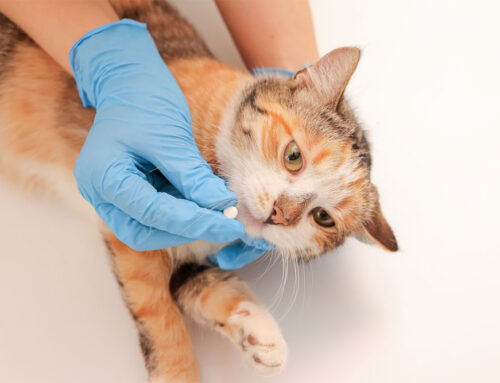
Consistency beats perfection here. A missed dose gets given when you notice, unless the next one is close, and never doubled up to make it even. Pets who fight medication often do better with a soft treat made for hiding pills, a spoonful of canned food, or a different form entirely, since a compounding pharmacy can turn many cardiac drugs into flavored liquids or smaller capsules. If pilling has become a twice-daily wrestling match, reach out before you start skipping doses. There's almost always another way in.
What Happens as Heart Disease Progresses?
Heart disease advances through stages, and each stage usually brings a dose change rather than a crisis. Congestive heart failure is the name for the stage where fluid backs up into the lungs or belly faster than the heart can keep it out, and many pets live comfortably with it for months to years once their medications are adjusted.
Early on there's a murmur and nothing else, which calls for monitoring and no prescriptions. Then comes measurable enlargement on imaging, the point where pimobendan typically enters. Once fluid appears, a diuretic joins in, and those doses tend to climb gradually as the heart asks for more support. Further along, some pets need a second diuretic or a reshuffled combination to stay comfortable.
Day to day, that looks like a pet who's mostly themselves, with stretches that need an adjustment. The goal shifts from slowing the disease to protecting good days, and those conversations go better with veterinarians who know your pet's history sitting across from you.
Your Heart Medication Questions, Answered
Will my pet be on these medications for the rest of their life?
Cardiac drugs manage a structural problem rather than curing it, so most pets stay on them once they've started. The combination shifts over time: doses rise, something gets added, occasionally one comes off because bloodwork says so. What shouldn't shift is consistency. Stopping a diuretic because your dog seems better can put fluid back in their lungs within a couple of days.
Is it ever safe to give my pet a human heart or blood pressure pill?
No. These drugs are dosed for human bodies, and several are dangerous for dogs and cats in small amounts, with a single blood pressure tablet capable of dropping a cat's pressure to a critical level. Human pain relievers can injure kidneys already working hard under a diuretic. If a prescription is running low, call us for a refill instead.
Does my pet need to change their diet or stop exercising?
Most pets with heart disease keep moving, just at their own pace. Let your dog choose the speed and stop before they're winded. Food matters more than families expect: salty treats, deli meat, and table scraps work against a diuretic, and a cardiac-formulated diet suits some patients better. Appetite often fades as things advance, so keeping calories going becomes its own goal.
Long-Term Heart Care for Northport Pets
A cabinet of new prescriptions feels heavy on day one and gets much lighter once every bottle has a job you understand. After that, the work is small and steady: breath counts while they nap on the couch, steady routines, and rechecks that catch a change before it turns into a scare.
Tidmore Veterinary Hospital has deep roots here in Northport and around Tuscaloosa, and cardiac patients are the ones we like seeing often, because the adjustments made at those visits are what buy comfortable months. Bring your notes and the questions that keep you up at night, and when your dog or cat is ready for a fresh look at their heart, book a cardiac evaluation with us.