

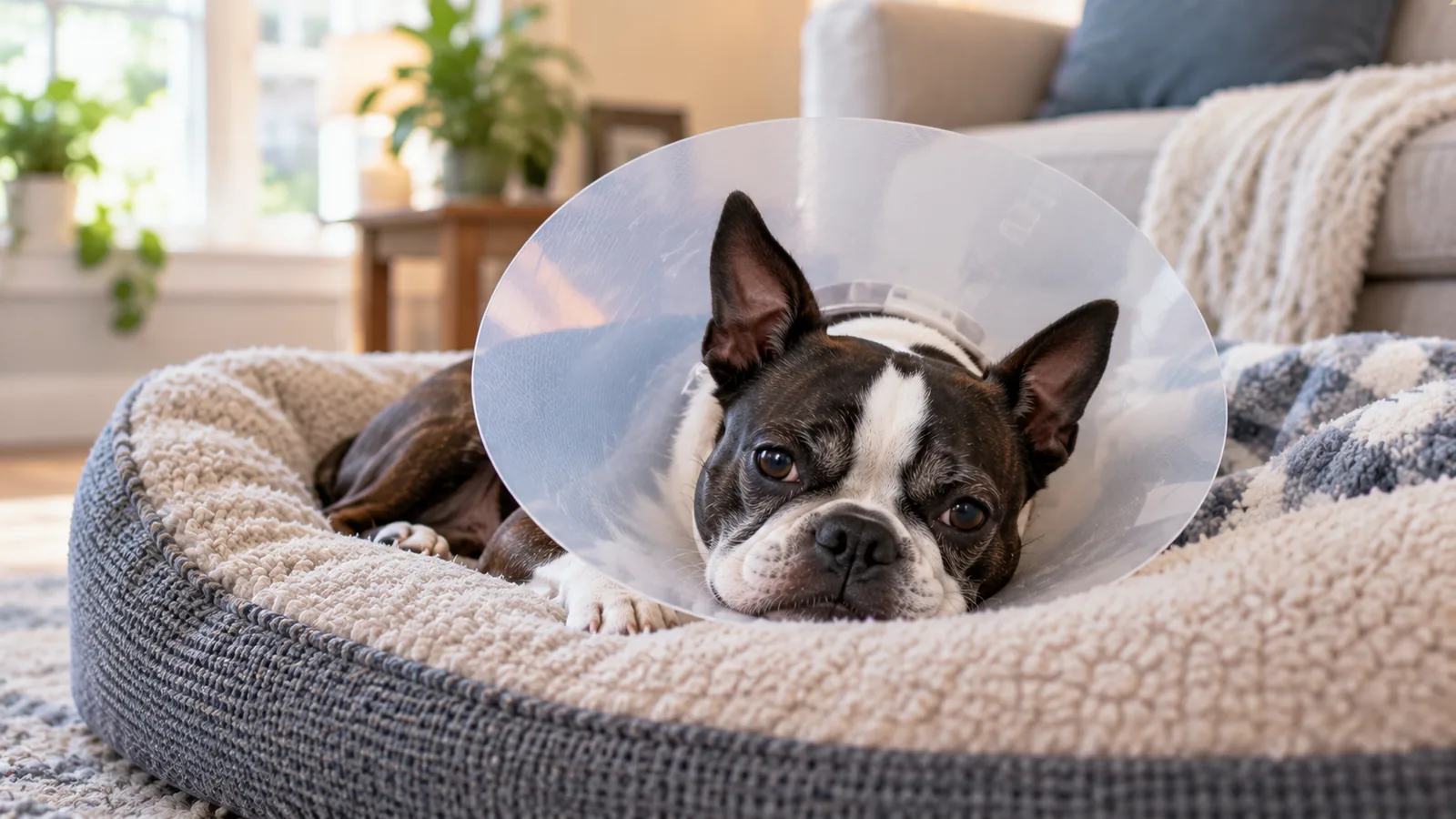
Integrative therapies can genuinely speed post-op healing, and they work best when built into the plan from the start. Laser therapy, acupuncture, and a careful return to gentle activity work alongside pain medication and rest, easing inflammation, bringing blood flow to tissue that is repairing, and getting your pet comfortable on their feet sooner. How quickly that happens depends on the procedure, your pet's age, and the way those early days go. The first week at home is where you are watching an incision and wondering whether what you see is normal, and care that is already in place makes it easier.
Tidmore Veterinary Hospital in Northport keeps most surgical patients overnight, so the first and hardest part of recovery happens with us rather than at home. Our AAHA-accredited hospital pairs surgical care with Traditional Chinese Veterinary Medicine and laser therapy, so healing has support from more than one direction. If your pet has a procedure coming up or is recovering at home now, talk through a recovery plan with us.
What Recovery Should Look Like at Home
- Most pets sleep more, eat less, and move stiffly for the first 24 to 48 hours, and that quiet stretch is part of healing.
- Bleeding through a bandage, repeated vomiting, pale gums, labored breathing, or a full day without food are reasons to call rather than wait until morning.
- Laser therapy and acupuncture lower inflammation and pain without another prescription, which helps most for pets who can't tolerate full doses of conventional medication.
- Keeping activity restricted for the whole window we set protects the repair underneath the skin, which heals far slower than the incision you can see.
What Happens in the First Hours After Surgery?
Anesthesia clears over several hours, and during that stretch a pet may shiver, whine, or look glassy-eyed even with good pain control on board. The body also launches an inflammatory response that pulls blood flow and repair cells toward the incision. Most of that unsteady phase passes before your pet ever comes home, which is why most surgical patients stay with us overnight rather than heading home the same afternoon. Continuous anesthetic monitoring tracks heart rhythm, oxygen, and body temperature while your pet is asleep, and that attention carries into the hours afterward, when they're warm, dosed with pain medications, and sleeping it off but not yet steady on their feet.
Healing then follows a rough sequence, though every patient moves at their own pace.
| Stage | What's happening inside | What you'll see |
| First 24 hours | Anesthesia clears, inflammation begins | Sleepiness, wobbly walking, little interest in food |
| Days 2 to 4 | Inflammation peaks, new tissue starts forming | Mild swelling or bruising, appetite creeping back |
| Days 5 to 14 | The incision seals and skin knits together | Closed edges, more energy, itching at the site |
| Weeks 3 to 8 | Deeper tissue remodels and gains strength | A pet who feels normal while bone or ligament still heals |
A spay on a six-month-old kitten and a cruciate repair on a nine-year-old Lab sit at opposite ends of that range. The procedure matters most, and a patient with other health conditions usually needs a longer runway. Outside evaluators review how anesthesia, pain control, and surgical protocols are handled here under our hospital AAHA-accreditation standards, which is the part of recovery no family sees from the lobby.
What's Normal Recovery Look Like?
Normal recovery is quiet and boring: more sleeping, a smaller appetite for a day or two, and an incision that looks slightly pink and a little puffy at the edges. Real trouble escalates instead of settling, and it nearly always involves the incision, the gut, or breathing.
What Do the First Few Days at Home Look Like?
Aftercare for a cat after surgery runs on the same rhythm as a dog's: the first three days carry most of worry, when appetite dips, naps run long, and the incision needs a look twice a day. Pain medications can make them groggy, and they’ll probably be unhappy about not being allowed to return to their normal routine of jumping on the couch.
Setting up a recovery space before you bring your pet home means one quiet room, a bed at floor level, food and water within a few steps, and nothing to jump onto. The cone keeps its job despite its bad reputation, because a tongue on a suture line can undo a surgeon's work in a few short minutes. Most pets sulk for a day, then adapt.
Three things make recovery worse, and all three are tempting:
- Human pain medication: Never give ibuprofen, naproxen, or acetaminophen, which are toxic to pets and dangerous alongside what we've already sent home.
- Ointments, peroxide, or alcohol: These irritate healing tissue, and a dry incision does better than a treated one.
- Baths, swimming, and skipped doses: Water softens a closing incision and can get into gaps that aren’t yet healed, and pain control works far better staying ahead of pain than chasing it.
How Do You Keep a Recovering Pet Still for Weeks?
Restriction protects the repair underneath the skin, which knits together far slower than the surface you can see. One leap off the bed can pull a suture line apart, shift an implant, or set a knee repair back weeks. The whole plan comes down to confinement, leash-only bathroom trips, no stairs, and no furniture.
Cage rest works best when the space is small enough to prevent a running start, tall enough for comfortable standing and turning, and lined with non-slip bedding.
What that looks like depends on the house:
- Crate or exercise pen: Ideal for dogs already comfortable in one, sized for standing and turning rather than pacing.
- One small room: A bathroom or laundry room suits cats well, with a low-sided litter pan so there's no climbing involved.
- Gates and rugs: Runners over hardwood give traction to a wobbly back end, and a gate at the stairs removes the single riskiest feature of most homes.
A bored pet is a pet who reinjures themselves. Puzzle feeders, snuffle mats, and other enrichment toys give a confined pet a job to do, which cuts the pacing, whining, and door-scratching that come with weeks of restricted activity. Scent games and five minutes of easy training burn mental energy without loading a healing leg.
Some households simply can't deliver that kind of quiet, especially with kids or a second dog who wants to play. Boarding with us for part of the recovery is worth asking about, and Northport families with unforgiving work schedules use it more than you'd guess.
Which Signs Mean You Should Call Right Away?
Bleeding that soaks through a bandage, repeated vomiting, pale gums, and collapse are emergencies that need a phone call the moment you see them, not a wait-and-see night. Add an incision that has opened, discharge that smells or turns yellow, swelling that grows day over day, or 24 hours without food.
Pets hide discomfort well, so the signs of pain worth acting on are the quiet ones: a hunched posture, panting at rest, trembling, or a sudden unwillingness to be touched near the incision.
Early beats late every time here. A puffy suture line on day three is usually a small fix; the same one on day six can mean a return to the operating room. Call us right away when you’re worried.
When Is a Breathing Change After Surgery an Emergency?
Every change in breathing after surgery is urgent. Open-mouth breathing in a cat, blue or gray gums, and a neck stretched forward to pull in air all signal respiratory distress, which never improves with waiting. That risk runs highest after chest or airway procedures, though it can follow any anesthetic event.
Several things can drive it: swelling in the throat after a breathing tube, fluid collecting where it doesn't belong, pain that keeps a patient breathing shallow and fast, and flat-faced breeds whose airways were narrow to start with. Bulldogs, Pugs, Persians, and Himalayans deserve extra watching through the first day or two.
Count breaths while your pet sleeps. A resting rate that stays above roughly 35 a minute deserves attention, even without other signs. Reach us by phone the moment breathing changes, and never wait overnight to see whether it settles on its own.
What If Your Pet Won't Eat After Surgery?
A day of disinterest in food is common after anesthesia and usually sorts itself out. A pet who won't eat does better with small warmed portions offered by hand every few hours than with a full bowl left down. Warming brings out aroma, and aroma is most of appetite for a recovering animal.
Protein builds the collagen that closes an incision, and calories fuel the immune work going on underneath it. Other things worth trying: boiled chicken and rice, a spoonful of canned food on top of kibble, feeding away from other animals in the house, or setting the dish right where your pet is lying so standing up isn't the price of dinner.
Cats need a shorter leash on this one. A cat who eats nothing for 48 hours can develop hepatic lipidosis, a liver problem that sets in when the body mobilizes fat faster than the liver can process it, and that turns a simple recovery into a hospital stay. Dogs carry more margin, though one who refuses food past a day is telling you something about nausea or pain.
If appetite hasn't turned a corner by the second day, the doctor overseeing your pet's case can sort out whether nausea, discomfort, or something deeper is behind it, with bloodwork run in our in-house lab rather than shipped out.
How Can You Tell If the Pain Medication Is Working?
Comfortable pets settle. They lie flat on one side, sleep without shifting every few minutes, and take food when it's offered. Dogs and cats report discomfort differently. Dogs get restless, pant, or whine, often worst in the evening once the house goes quiet. Cats go inward instead: no grooming, no jumping, hiding behind the furniture. Ears rotated outward, a tightened muzzle, and eyes squeezed half shut are what a feline grimace scale scores, which gives you something concrete to check instead of guessing at how your cat feels.
Multimodal pain control is the current standard, and it's simpler than the name suggests: two or three medications working on different pathways, each at a lower dose than any one of them would need alone. Adding integrative therapies like laser and acupuncture also help lower pain medication needs. Never split or double a dose at home to see what happens, or add human pain medications from your own cabinet. If the plan isn't holding, call us and we'll change it.
Which Integrative Therapies Speed Up Healing?
The strongest recovery plans get built before surgery, not after. Integrative care layers onto a solid conventional plan rather than replacing one. The procedure, your pet's age, other health conditions, temperament, and what your household can realistically manage all shape which therapies go into the mix and how quickly activity opens back up.
| Therapy | What it targets | What a session is like | Where it happens |
| Laser therapy | Inflammation, wound healing, sore joints and soft tissue | A few quiet minutes with a handpiece over the area, no sedation | Offered here |
| Acupuncture | Pain pathways, muscle tension, nausea and appetite | Thin needles placed while your pet rests, often dozing | Offered here |
| Physical rehabilitation | Range of motion, muscle mass, gait after orthopedic repair | Guided exercises, water work, hands-on stretching | Referred out, coordinated by us |
What Does Laser Therapy Do for a Healing Incision?
Laser therapy lowers inflammation and speeds cellular repair without adding another medication to the pile, and most pets lie still through a session that runs only a few minutes. The light energy gets absorbed by cells around the surgical site, nudging them to produce more of the fuel they use for rebuilding. Better circulation means more oxygen delivered and less swelling sitting on the tissue.
No sedation, no clipping, no needles. The benefit builds with repetition, so a short series through the early weeks does more than one visit ever will. Incisions, joints, and soft-tissue injuries are where it helps most.
Is Acupuncture Worth Adding After Surgery?
Veterinary acupuncture works on pain pathways directly, which makes it especially useful for post-surgical patients whose kidneys, liver, or stomach can't handle a full dose of conventional pain medication. Senior pets and cats land in that category more often than any other group.
The needles are finer than the ones used to draw blood, and most patients relax within a few minutes, with a fair number falling asleep on the table. Sessions also help with nausea, appetite, and the muscle tension that builds up when an animal holds themselves stiffly for a week. Chinese veterinary medicine sits alongside conventional surgery here rather than competing with it.
How Does Rehabilitation Rebuild Strength After Orthopedic Surgery?
Veterinary physical rehabilitation rebuilds the muscle a pet loses over weeks of restricted movement, using controlled exercises, water work, and hands-on range-of-motion work matched to the surgery that was done. Muscle vanishes fast on a limb that isn't loading, and it returns slower than it left.
We don't have a hydrotherapy setup in the building, so a patient who needs that level of structured work goes to a rehabilitation-certified practice and we stay involved in the plan. Plenty of useful work is simpler: slow leash walks in a straight line, weight-shifting drills, gentle flexing of a joint through its range. Each advance gets cleared by the veterinarian who performed the surgery, since starting too early costs more than starting a week late.
Questions We Hear in the Week After Surgery
Is it normal for the incision to look bruised or lumpy?
Bruising along and below a surgical site is common, and it often looks worse on days two and three before fading. Gravity pulls it downward, so a spay incision can bruise toward the flank. A firm ridge under the skin is usually repair tissue doing its job. What doesn't belong: swelling that grows, heat, a gap between the skin edges, or drainage. If you can't tell which you're looking at, a quick recheck settles it in minutes.
How long does my pet have to wear the cone?
Most pets wear the cone until the sutures or staples come out, which for routine procedures tends to land around two weeks. Alternatives exist, including inflatable collars, soft recovery suits, and a onesie for a small dog, but a determined licker defeats most of them. Check with us before switching, because one unsupervised hour is all it takes to open a closing incision.
Do puppies and kittens recover faster than older pets?
Younger patients generally heal quicker, with better circulation and less background inflammation working against them. The catch is that puppies and kittens feel wonderful long before they're healed, which makes restriction the hardest part of their recovery rather than the medication. A kitten vaulting off the counter on day four is still only four days into a two-week process. Older animals move slower and follow the rules better, which evens the odds more than you'd expect.
Getting Your Pet Back to Themselves
Most recoveries go well, and the ones that go best are the ones where nobody is guessing about what's normal, which signs mean pick up the phone, and when the therapies that speed things along should start. Tidmore Veterinary Hospital sees Northport families through this every week, and the questions you think are too small are still worth asking.
If your pet has a procedure coming up or you're in the thick of recovery right now, book a visit and we'll map it out with you.